


Gold & Silver Weekly Watchouts: Fed, BOJ, BOE, Retail Sales & Options Expiry | September 13–19, 2026

Gold and silver enter one of the most concentrated central-bank weeks of 2026. The Federal Reserve, Bank of England and Bank of Japan will all announce monetary-policy decisions. Markets will also absorb US retail sales, China’s industrial data, UK inflation, Treasury auctions, oil inventories and a major quarterly options expiration. Three major central banks deciding within the same week is not unprecedented, but it creates an unusually concentrated window of risk—especially when markets are confronting inflation, elevated oil prices and the possibility of simultaneous tightening in the US and Japan. The central question is no longer simply whether inflation is high or growth is weak. Markets must decide whether central banks will tighten into an energy shock—and whether higher yields, a stronger US dollar and geopolitical fear can coexist.
That creates competing forces for precious metals:
🥇Gold may benefit from safe-haven demand and doubts about sovereign debt, but it can face pressure if real yields and the US dollar rise sharply.
🥈Silver can benefit from monetary demand and a weaker dollar, but it is also exposed to China, manufacturing and broad risk appetite.
🛢️Oil remains the bridge between geopolitics and monetary policy. Higher energy prices can support inflation-hedge demand while simultaneously pushing yields higher.
All times below are Eastern Time. Forecasts are consensus-calendar snapshots available before the releases and may change.
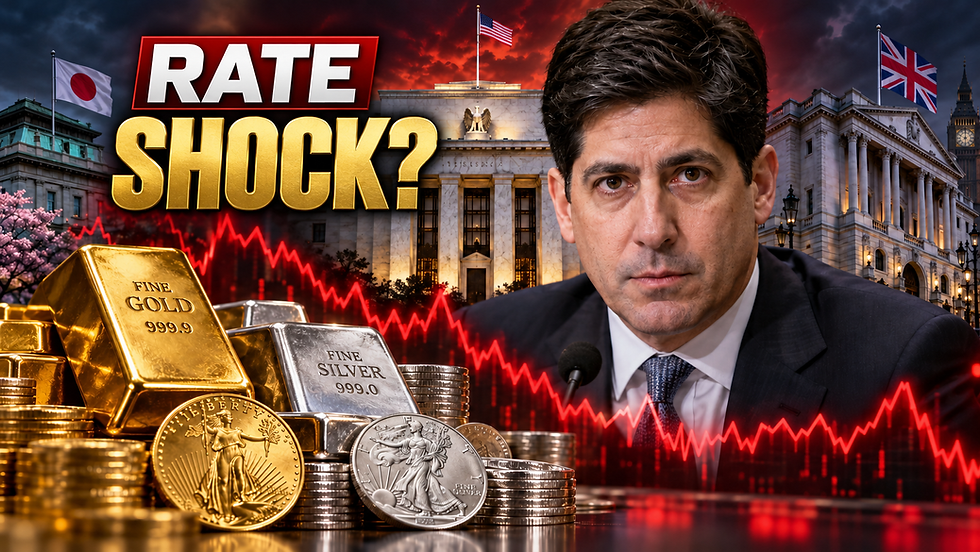
🚨MY BIGGEST GOLD & SILVER WATCHOUTS THIS WEEK
1️⃣ Wednesday’s Retail Sales, Federal Reserve Decision, Dot Plot & Warsh Press Conference
The Federal Reserve’s September 15–16 meeting is the week’s biggest scheduled event for gold and silver. The Fed held its target range at 3.50%–3.75% in July, but three officials—Beth Hammack, Neel Kashkari and Lorie Logan—preferred an immediate 25-basis-point increase. Fed-funds futures now heavily favor a September hike, which would raise the target range to 3.75%–4.00%, although many economists still expect the Fed to hold.
Before the decision, US retail sales arrive Wednesday, September 16, at 8:30 AM ET. Strong spending could give the Fed more room to tighten, while weak spending could pull yields lower. Markets will look beyond the headline number to the underlying consumer-spending data and revisions to previous months, which may provide a clearer picture of the economy’s strength.
At 2:00 PM ET on Wednesday, the Fed will announce its interest-rate decision and publish its policy statement, vote tally, updated economic projections and new dot plot. Chairman Kevin Warsh’s press conference begins at 2:30 PM ET and could confirm—or reverse—the market’s initial reaction.
The normal market relationships are:
A surprise rate cut would likely support gold and silver by pushing Treasury yields, real yields and the US dollar lower. However, gold could outperform silver if the cut is interpreted as an emergency response to financial or economic stress.
A hold would depend on expectations and guidance. Because markets currently lean toward a hike, an unexpected hold could initially lift metals. That rally could fade if Warsh signals that the Fed merely postponed additional tightening.
A rate hike would normally pressure gold and silver, especially if real yields and the dollar rise. Metals could recover after the initial selloff if the hike was already priced in and Warsh indicates that the tightening cycle is ending or that rate cuts may eventually follow.
I have maintained since Warsh was nominated that the Fed’s next major policy shift would ultimately be toward a cut rather than an extended series of hikes. My interpretation is that Warsh would prefer to create a path toward lower rates once he believes inflation and the Fed’s credibility permit it—but that is my analysis, not confirmed guidance from the chairman.
Warsh cannot set interest rates by himself. The FOMC has up to 12 voting members, and policy requires majority support. As chairman, he must persuade enough colleagues—or provide sufficient economic and institutional cover—for the Committee to change direction without appearing to abandon the inflation fight.
The decisive signals will be real yields and the US dollar. They will reveal whether markets interpret the decision as tighter policy, the end of tightening or the beginning of a path toward eventual cuts.
2️⃣ Friday’s Bank of Japan Decision & Ueda Press Conference
The Bank of Japan meets September 17–18. It held its overnight call-rate target near 1.00% in July by an 8–1 vote, while board member Hajime Takata preferred 1.25%. Consensus calendars currently lean toward a 25-basis-point increase, and a hike is already substantially priced. That means the largest reaction may come from the vote, future guidance and Governor Kazuo Ueda’s press conference—not simply from a move to 1.25%.
Japan matters far beyond the yen. Higher Japanese yields can encourage banks, insurers and pension funds to bring capital home from foreign bonds. A stronger yen can also force investors to unwind leveraged carry trades. Gold may benefit from a weaker dollar or sovereign-bond stress. Silver could initially struggle if the decision triggers broad deleveraging and a rush for cash.
3️⃣ UK CPI & the Bank of England
UK inflation arrives Wednesday, followed by the Bank of England decision Thursday. The BOE held Bank Rate at 3.75% in July by a 6–3 vote. Three members wanted a hike to 4.00%. The Bank said inflation risks were tilted upward, particularly because of higher Middle East energy prices and possible second-round effects on wages and prices. Consensus currently expects another hold, but Wednesday’s CPI report could change the tone. A hawkish surprise could lift global yields. A softer decision could reduce some of the pressure on precious metals.
📅This Week’s Key Events
Sunday Night, September 13 — THE GLOBAL OPEN
🌎Three-Central-Bank Week Begins: Gold, silver, oil and currency futures reopen as markets prepare for the Federal Reserve, Bank of England and Bank of Japan.
🛢️Iran, Hormuz & Energy Risk: Middle East headlines remain capable of overriding the scheduled calendar. Any disruption involving tankers, ports, pipelines, refineries, the Strait of Hormuz or the Bab Al-Mandeb Strait could move oil, inflation expectations, yields and safe-haven demand simultaneously.
I’ll Be Watching:
Oil’s opening move.
Gold’s response relative to Treasury yields.
Whether silver follows gold or trades as a risk asset.
Shipping traffic through the Strait of Hormuz.
Naval escorts and insurance costs.
New military statements from CENTCOM and Iran.
Attacks on tankers, ports, pipelines or energy infrastructure.
New sanctions targeting Iran’s oil revenue.
My Take
Geopolitical headlines could dominate the open, but I would not assume escalation automatically sends metals lower or higher. Watch oil, the dollar and Treasury yields together. If gold rises alongside oil and yields, safe-haven demand is likely overpowering the normal rate relationship. If yields and the dollar surge while gold falls, the market is trading the inflationary policy consequences more aggressively than the immediate geopolitical fear.
*Note: Gold and silver have recently sold off during some escalations because moves in the dollar and bond yields outweighed safe-haven demand. That dynamic could continue.
Monday, September 14 — CHINA, CREDIT & POSITIONING
🏦China Credit Data: China’s new yuan loans and aggregate-financing figures remain within their normal release window. Stronger credit creation may support expectations for construction, manufacturing and industrial demand. Weak borrowing may show that stimulus is not reaching the real economy.
🌎ECB President Lagarde: Lagarde is scheduled to speak at approximately 11:15 AM ET. Markets will listen for comments on last week’s ECB decision, energy inflation, growth and the euro.
📊 China’s Major Activity Package— Approximately 10:00 PM ET: China is expected to release August industrial production, retail sales, fixed-asset investment, property and unemployment data Tuesday morning in Beijing—Monday night in the US.
I’ll Be Watching:
New yuan loans and aggregate financing.
Industrial production.
Retail sales.
Fixed-asset and property investment.
The yuan.
Shanghai gold premiums.
Copper and other industrial commodities as confirmation for silver.
🟢 Potentially Bullish for Gold & Silver
Stronger Chinese manufacturing.
Improving household demand.
Accelerating credit growth.
Additional stimulus signals.
Firm Chinese physical-gold buying.
Yuan weakness increasing domestic demand for gold as a store of value.
🔴 Potentially Bearish for Gold & Silver
A sharp industrial slowdown.
Further property deterioration.
Weak credit demand despite stimulus.
A growth scare that damages industrial-silver expectations.
A stronger dollar ahead of the Fed.
My Take
China matters enormously to silver because it sits at the center of both industrial demand and the global processing chain. Chinese industrial silver demand reached approximately 261 million ounces in 2023—about 40% of worldwide industrial demand—and increased another 7% in 2024. China is also the world’s second-largest silver-mining country, accounting for roughly 14% of global mine production, while industry estimates commonly place its share of global silver refining and processing capacity at approximately 60%–70%.
China’s influence is especially important because of its dominance in solar manufacturing. The country accounted for more than 90% of global solar-panel shipments in 2023, and photovoltaic manufacturing alone consumed approximately 198 million ounces of silver worldwide in 2024—about 29% of total industrial silver demand.
That creates two competing interpretations when Chinese economic data disappoint:
The immediate reaction can be bearish for silver if traders expect weaker manufacturing, construction, electronics, solar production or consumer demand.
The later reaction can become bullish if weak data increase expectations for monetary stimulus, infrastructure spending, grid investment or additional support for strategic manufacturing.
That is why I will be watching more than the headline economic numbers. The yuan, copper, Chinese equities and Shanghai-traded metals should help reveal whether markets are pricing weaker physical demand or a coming stimulus response. Silver’s first move may not be its final move.
Tuesday, September 15 — FOMC BEGINS & THE 20-YEAR AUCTION
🏦UK Labor Data — 2:00 AM ET: Wage growth and unemployment will shape expectations for Thursday’s Bank of England decision. Persistent wage inflation would strengthen the argument for another hike.
👷Empire State Manufacturing — 8:30 AM ET: The headline index can be volatile. New orders, employment and prices paid may provide better information about growth and inflation.
🚨FOMC Meeting Begins: The FOMC is already in its communications blackout period, and its two-day meeting begins Tuesday ahead of Wednesday’s decision. Positioning could become increasingly sensitive to surprises in economic data, oil prices or Treasury yields.
📊20-Year Treasury Bond Auction — 1:00 PM ET: The Treasury will reopen $13 billion of 20-year bonds. This maturity is sensitive to term-premium, deficit and duration-demand concerns.
🛢️API Petroleum Inventories — 4:30 PM ET: The private inventory estimate provides the first indication of weekly changes in crude and refined-product stocks before Wednesday’s official EIA report.
🏦Japan Trade & Machinery Orders — 7:50 PM ET: Exports, imports, the trade balance and machinery orders arrive shortly before the BOJ meeting. Import costs matter for inflation, while machinery orders provide a volatile read on future business investment.
I’ll Be Watching:
UK wage growth and unemployment.
Empire new orders, employment and prices paid.
The 20-year auction tail or stop.
Indirect-bidder participation and dealer takedown.
Oil inventories.
Japan’s trade balance and the yen.
🟢 Potentially Bullish for Gold & Silver
A strong 20-year Treasury auction lowers yields.
Weak US manufacturing reduces expectations for additional Fed tightening.
Softer UK wages reduce pressure on the Bank of England to raise rates.
A stronger yen weakens the US dollar without triggering widespread deleveraging.
An unexpected build in oil inventories lowers energy prices and inflation expectations.
🔴 Potentially Bearish for Gold & Silver
A weak 20-year Treasury auction drives yields higher.
Strong manufacturing or elevated prices paid reinforce a hawkish Fed outlook.
Persistent UK wage inflation strengthens the case for another BOE hike.
A large oil-inventory draw pushes energy prices and inflation expectations higher.
Strong Japanese data increase expectations for a BOJ hike and trigger disruptive carry-trade deleveraging.
My Take
The 20-year auction may be Tuesday’s cleanest market test. Weak demand could tighten financial conditions immediately before the Fed. Strong demand could calm the bond market and give metals breathing room.
Wednesday, September 16 — FED DECISION DAY
🏦UK Consumer Price Index — 2:00 AM ET: Consensus calendars currently expect annual inflation near 3.1%, up from 2.9%, with core inflation around 2.7%. Services and energy-sensitive components will matter for Thursday’s BOE decision.
🛍️US Retail Sales — 8:30 AM ET: Headline sales, sales excluding automobiles and the control group will test the strength of the consumer. Revisions to July may be as important as August’s first estimate.
🌎Import & Export Prices — 8:30 AM ET: Import prices can reveal whether tariffs, energy and currency movements are feeding inflation into the US economy.
🏠Business Inventories & NAHB Housing Index — 10:00 AM ET: Housing remains highly sensitive to interest rates. Weak builder confidence may show that elevated borrowing costs are constraining activity.
🛢️EIA Petroleum Inventories — 10:30 AM ET: Crude, gasoline, distillate, production and implied demand will influence oil and inflation expectations.
🚨Federal Reserve Decision — 2:00 PM ET: The Fed releases its rate decision, statement, vote and Summary of Economic Projections.
🎤 Fed Press Conference — 2:30 PM ET: The press conference can confirm or reverse the statement reaction.
💵Treasury International Capital Data — 4:00 PM ET: The TIC report provides a delayed look at foreign purchases and sales of US securities. It can help frame longer-term demand for Treasuries, but monthly figures can be volatile.
I’ll Be Watching:
UK inflation and its implications for Thursday’s BOE decision.
Headline and core US retail sales, the control group and prior-month revisions.
Whether import prices show tariffs, energy or currency movements feeding US inflation.
Builder confidence and other signs that elevated borrowing costs are constraining housing.
Crude, gasoline and distillate inventories after the EIA report.
The Fed’s rate decision and vote count.
The 2026 and 2027 median rate projections.
The Fed’s inflation, unemployment and economic-growth forecasts.
The two-year Treasury yield, 10-year real yield and US dollar.
Gold and silver’s reaction to the statement, projections and press conference.
Foreign demand for US securities in the TIC report.
Fed Scenario Map
Fed Cuts Rates
Likely first reaction: Treasury yields and the US dollar fall while gold and silver rise. Gold may outperform silver if markets interpret the cut as an emergency response to weakening growth, labor-market stress or financial instability.
Fed Holds & Signals Patience
Likely first reaction: yields and the dollar fall while gold and silver rise—especially if markets expected a hike. The rally would be stronger if the dot plot also removes or reduces projected tightening.
Fed Holds but Remains Hawkish
Likely reaction: Gold and silver could rally initially because markets are heavily positioned for a rate hike. That rally could fade—or reverse—if Warsh signals that the Fed has merely postponed a hike and remains prepared to tighten if inflation persists. This is the outcome I currently consider most likely.
Fed Hikes 25 Basis Points but Softens the Path
Likely reaction: volatile or mixed. Metals could recover from an initial decline if the hike was already priced in and the dot plot points to fewer future increases or an eventual path toward cuts.
Fed Hikes & Projects More Tightening
Likely first reaction: Treasury yields, real yields and the US dollar rise while gold and silver fall. Silver could decline more sharply if stocks and industrial commodities also weaken.
🟢 Potentially Bullish for Gold & Silver
UK inflation comes in softer than expected, reducing pressure on the BOE to hike.
US retail sales or prior-month revisions disappoint.
Import-price pressures ease.
Weak housing data reinforce concerns about elevated borrowing costs.
The Fed cuts rates or holds when markets expect a hike.
A hike is paired with a lower future policy path.
Warsh emphasizes weakening growth or rising labor-market risks.
Real yields and the US dollar fall.
Strong foreign demand for Treasuries helps contain longer-term yields.
🔴 Potentially Bearish for Gold & Silver
UK inflation exceeds expectations and strengthens the case for a BOE hike.
Strong retail sales give the Fed more room to maintain tighter policy.
Import prices reveal persistent tariff or energy-related inflation.
A large petroleum-inventory draw lifts oil and inflation expectations.
A Fed hike is paired with additional projected tightening.
Warsh emphasizes persistent inflation and the risk of energy-price pass-through.
The dot plot moves materially higher.
Real yields and the US dollar rise together.
Weak foreign demand for Treasuries contributes to higher yields.
My Take
Three major central banks deciding within the same week is not unprecedented, but it creates an unusually concentrated window of risk. The Fed’s decision Wednesday will be followed by the Bank of England Thursday and the Bank of Japan Friday, leaving gold and silver exposed to rapidly changing expectations for global interest rates, currencies and bond yields.
Wednesday’s economic data will establish the market’s starting position before the Fed. UK inflation could move global yields, while US retail sales and import prices could reshape expectations for growth, inflation and monetary policy only hours before the decision. The EIA report could add another complication if oil inventories produce a sharp move in energy prices.
Still, the Fed will dominate the afternoon. Do not judge the meeting from the first candle. The statement can move metals one way, the projections can reverse that move, and Warsh’s press conference can reverse it again. The most reliable confirmation will come from the direction of real yields and the US dollar after Warsh finishes speaking.
Thursday, September 17 — BOE, HOUSING, TIPS & 24-HOUR TRADING
🏦Bank of England Decision — 7:00 AM ET: The BOE is expected to hold Bank Rate at 3.75%, but the vote split will matter. Three members voted for a hike in July.
👷Initial Jobless Claims — 8:30 AM ET: Claims provide one of the timeliest readings on labor-market stress. Consensus calendars currently look for approximately 209,000 claims after 206,000.
🏠Housing Starts & Building Permits — 8:30 AM ET: Consensus currently points to a partial rebound in housing starts after July’s sharp decline. Permits will provide a cleaner signal about future construction.
🏭Philadelphia Fed Survey — 8:30 AM ET: The headline, new orders, employment and prices paid will test whether manufacturing strength is broadening or losing momentum.
🕐SEC 24-Hour Trading Roundtable — 10:00 AM ET: The SEC will discuss preparations for longer US equity-market trading hours. This is not a direct precious-metals catalyst, but longer trading could eventually change overnight liquidity and the transmission of global shocks.
📊10-Year TIPS Auction — 1:00 PM ET: The Treasury will reopen $19 billion of 10-year inflation-protected securities. Demand can affect real yields—one of gold’s most important macro variables.
🏦 Federal Reserve Balance Sheet — 4:30 PM ET: The H.4.1 report will show changes in Fed assets, reserve balances and liquidity facilities.
🏦Japan CPI — 7:30 PM ET: Japan’s inflation report arrives while the BOJ is meeting and could shape the final policy discussion.
I’ll Be Watching:
The BOE vote split.
UK language on energy and second-round inflation.
Claims and housing revisions.
TIPS demand and the real-yield reaction.
Japan’s core inflation.
USD/JPY.
Whether Thursday reverses the post-Fed move.
🟢 Potentially Bullish for Gold & Silver
A dovish BOE reduces global yield pressure.
Claims rise and housing weakens.
Strong TIPS demand pushes real yields lower.
A stronger yen weakens the dollar.
The Fed balance sheet shows increased liquidity.
🔴 Potentially Bearish for Gold & Silver
A hawkish BOE surprises markets.
Strong US data reinforce tighter-policy expectations.
The TIPS auction tails and real yields rise.
Japanese inflation raises fears of a disorderly BOJ repricing.
The dollar recovers after Wednesday’s decline.
My Take
Thursday could either confirm or reverse Wednesday’s Fed move. It will be the market’s first full opportunity to reassess Warsh’s message while simultaneously processing the BOE decision and preparing for Friday’s BOJ announcement. The BOE vote split will show whether another major central bank is moving toward tighter policy. Later, the 10-year TIPS auction will test demand for inflation protection and could move real yields—one of gold’s most important macro drivers. Strong demand could reinforce a post-Fed metals rally, while a weak auction could push real yields higher and erase it.
Japan’s CPI report then becomes the final major setup for the BOJ. Hot inflation could strengthen expectations for a rate hike and increase the risk of volatility in the yen, US dollar and global carry trades. Thursday is therefore not simply the day after the Fed—it is the bridge between three major central-bank decisions and could produce a second wave of volatility across gold and silver.
Friday, September 18 — BOJ & QUARTERLY EXPIRY
🚨Bank of Japan Decision — The BOJ is expected to decide whether to hold near 1.00% or raise the overnight rate toward 1.25%. Watch the vote, guidance and yen reaction—not only the headline decision.
📈UK Retail Sales — 2:00 AM ET: Consensus calendars currently expect another monthly decline. Weak consumption could reinforce growth concerns after Thursday’s BOE decision.
🎤 BOJ Governor Ueda Press Conference — Approximately 2:30 AM ET: Ueda’s explanation of inflation, future rates and the pace of tightening could reinforce—or reverse—the initial reaction to the BOJ decision.
🌎ECB President Lagarde — Approximately 6:30 AM ET: Markets will listen for any updated view on energy, inflation and financial conditions following the Fed and BOE.
🏭US Industrial Production — 9:15 AM ET: Consensus calendars currently anticipate a modest monthly increase. Strong manufacturing can support silver’s industrial-demand narrative, but may also lift yields if it strengthens the tightening case.
🎤Fed Vice Chair Bowman — 9:30 AM ET: Bowman is scheduled to speak about stress testing. Any monetary-policy comments would receive attention as one of the first scheduled Fed appearances after the decision.
⚡$6.2 Trillion Quarterly Options Expiration: Citadel Securities estimates that approximately $6.2 trillion in US options exposure will expire Friday alone, concluding a period in which roughly $9.6 trillion expires through September 18. This represents notional exposure—not $6.2 trillion changing hands—but dealer hedging, contract rolls and position unwinds could still amplify moves in stocks, volatility, Treasury yields and the US dollar, especially near the opening and closing bells. This is not a blanket COMEX gold-and-silver expiration, so any effect on precious metals would occur indirectly through broader financial markets.
📊CFTC Commitments of Traders — 3:30 PM ET: The report will show gold and silver futures positioning as of Tuesday, before the Fed decision. It can still reveal whether the metals entered the meeting with crowded longs, heavy shorts or significant commercial hedging.
I’ll Be Watching:
The BOJ decision, vote and forward guidance.
Governor Ueda’s press conference and any signal about additional rate increases.
USD/JPY and the size and speed of the yen’s reaction.
Japanese government-bond yields and whether higher yields spread into US and global bond markets.
The US dollar, Treasury yields and real yields.
Signs of an orderly carry-trade adjustment versus forced cross-asset deleveraging.
US industrial production and its competing implications for silver demand and Fed policy.
Equity volatility and unusual price action surrounding quarterly options expiration.
Whether gold and silver retain their moves through Friday’s close.
Managed-money positioning in gold and silver before the Fed decision.
🟢 Potentially Bullish for Gold & Silver
A BOJ hike strengthens the yen and weakens the US dollar without triggering widespread liquidation.
Ueda signals that any additional tightening will be gradual and data-dependent.
Japanese yields rise without causing a sharp selloff in US Treasuries or global equities.
Softer US industrial production lowers Treasury yields and future Fed-rate expectations.
Post-Fed dollar weakness and falling real yields continue through Friday.
Equity volatility produces safe-haven demand without creating margin-driven selling.
Options expiration passes without significant cross-asset stress.
🔴 Potentially Bearish for Gold & Silver
A hawkish BOJ surprise triggers a disorderly carry-trade unwind and forced liquidation across markets.
Japanese capital repatriation contributes to selling in US Treasuries and higher global yields.
The BOJ holds and sounds unexpectedly dovish, causing the yen to weaken and the US dollar to rally.
Strong US industrial production reinforces expectations for tighter Fed policy.
Real yields and the dollar rise together.
Expiration-related volatility produces margin pressure and a rush into cash.
Gold and silver surrender their post-Fed gains before Friday’s close.
My Take
Friday’s BOJ decision and Ueda’s press conference will complete a rare, highly concentrated week involving three major central banks. The most important distinction will be between an orderly yen rally and a disorderly carry-trade unwind. An orderly rise in the yen could weaken the US dollar and support gold and silver. A violent repricing could instead force investors to sell metals alongside stocks and other assets to raise cash.
Quarterly options expiration may amplify the reaction, making some intraday moves more technical than fundamental. The CFTC report will also describe positioning from before the Fed decision, so it should be treated as historical context rather than a real-time picture. For that reason, Friday’s first move may be misleading. A move that survives Ueda’s press conference, quarterly expiration and the closing bell—and remains intact when futures reopen Sunday—will carry considerably more weight than a brief intraday spike.
🌎ALL-WEEK GEOPOLITICAL & FINANCIAL WATCHOUTS
🔥Iran, Hormuz & Global Energy
Iran and the Strait of Hormuz remain the largest unscheduled risks of the week. Any disruption to shipping or energy infrastructure could raise oil prices, inflation expectations and safe-haven demand.
The short-term metals response depends on which channel dominates:
Safe-haven channel: Fear increases demand for gold.
Inflation-and-yield channel: Higher oil raises inflation expectations, yields and potentially the dollar.
Growth channel: An energy shock weakens consumption and industrial activity, complicating silver’s response.
Why Stackers Should Care
An energy shock can create stagflation—weak growth alongside persistent inflation. That can strengthen gold’s long-term monetary appeal, but it can also produce violent short-term selloffs if bond yields and the dollar rise first.
🔥Japan, the Yen & the Carry Trade
Japan’s rate decision can affect global markets through capital flows and leverage. Japanese institutions are major holders of foreign bonds. Higher domestic yields may encourage repatriation, while a stronger yen can force leveraged traders to unwind positions.
I’ll Be Watching:
USD/JPY.
Japanese two-year and 10-year yields.
US Treasury yields.
Japanese financial stocks.
Cross-asset volatility.
Whether gold acts as a safe haven or a source of liquidity.
Why Stackers Should Care
Gold can benefit from currency instability and sovereign-bond stress, but it may be sold temporarily during margin calls. Silver is normally more vulnerable during forced liquidation because of its industrial and risk-sensitive characteristics.
⚡$6.2 Trillion Quarterly Expiration & Market Liquidity
Citadel Securities estimates that approximately $6.2 trillion in US options exposure will expire Friday alone, concluding a period in which roughly $9.6 trillion expires through September 18. These figures represent notional exposure—not trillions of dollars physically changing hands—but the associated dealer hedging, gamma adjustments, contract rolls and position unwinds could amplify movements in equities and volatility, particularly near the opening and closing bells.
This is not a blanket COMEX gold-and-silver expiration, but precious metals do not trade in isolation. If expiration-related flows trigger a sharp dollar rally, rising Treasury yields, falling equities or a scramble for liquidity, that stress could spill into gold and silver. Conversely, an orderly expiration that reduces hedging pressure could allow the week’s underlying central-bank and macroeconomic signals to reassert themselves.
🥈 Russia, Ukraine & Energy Infrastructure
Developments involving Russia, Ukraine, pipelines, refineries, ports or sanctions can affect European energy prices and global risk sentiment. A major escalation could support gold through safe-haven demand, but higher energy prices can also reinforce hawkish central-bank expectations. I will focus on verified changes to supply, infrastructure or sanctions rather than reacting to every battlefield headline.
💵 Treasury Yields, Real Yields & the US Dollar
These remain the most important cross-market signals for precious metals.
Nominal Treasury Yields:
Nominal yields reflect expected inflation, expected short-term rates and term premium. Rising yields can pressure gold and silver by increasing the return available on government debt.
Real Yields:
Real yields subtract expected inflation from nominal yields. Because gold pays no interest, rising real yields generally increase its opportunity cost. Thursday’s TIPS auction makes this especially important.
The US Dollar:
Gold and silver are globally priced in dollars. A stronger dollar generally makes metals more expensive for buyers using other currencies, while a weaker dollar can support international demand.
The Key Distinction
Do not watch yields or the dollar alone. The strongest bearish combination is usually rising real yields and a rising dollar. Gold showing strength despite both would signal unusually powerful safe-haven or confidence demand.
🥈 SILVER-SPECIFIC WATCHOUTS
Silver faces both monetary-policy risk and industrial-demand risk this week. China’s industrial production, US manufacturing reports and global risk appetite can cause silver to diverge from gold. If gold rises on fear while manufacturing expectations weaken, the gold-to-silver ratio may increase.
🟢 Potentially Bullish for Silver
A weaker dollar and falling real yields.
Stronger Chinese industrial production.
Better Chinese credit growth.
Stable equity markets.
Improving US production without a major yield spike.
Strong physical demand or tightening retail availability.
Silver outperforming gold after the Fed.
🔴 Potentially Bearish for Silver
A sharp Chinese slowdown.
A disorderly carry-trade unwind.
Broad equity deleveraging.
A hawkish Fed and stronger dollar.
Rising real yields.
Gold receiving safe-haven demand while industrial metals fall.
🥇 CENTRAL-BANK GOLD, ETFs & PHYSICAL DEMAND
Central-bank gold accumulation remains an important structural backdrop even when short-term prices are dominated by interest rates.
I will monitor:
Official central-bank purchase disclosures.
Gold ETF inflows and outflows.
Shanghai premiums and Chinese physical demand.
Indian demand and local premiums.
Coin and bar premiums in the US.
COMEX and London inventory movements.
Any evidence of gold being used in sanctions avoidance or reserve diversification.
Physical demand does not guarantee that futures prices rise every day. However, sustained official and private buying can provide support during monetary and geopolitical uncertainty.
🧭 MY BOTTOM LINE FOR STACKERS
This is not a one-event week. The Fed will dominate Wednesday, but the BOE, BOJ, Treasury auctions, China, retail sales, oil and quarterly expiration can reinforce—or reverse—the first move.
For physical stackers, the most important questions are:
Did the long-term monetary outlook change?
Did real yields move sustainably or temporarily?
Did the dollar confirm the metals move?
Did silver move because of monetary demand, industrial expectations or forced liquidation?
Did physical premiums and availability change with the paper price?
Many stackers use dollar-cost averaging to avoid the impossible task of perfectly timing central-bank decisions. Volatility can create opportunity, but purchases should remain consistent with personal liquidity needs, risk tolerance and time horizon.
Expect volatility. Watch the relationships—not just the headlines.
WE STACK. WE HOLD. WE THINK IN YEARS, NOT DAYS.
🦀 Crustacean Nation: Which catalyst matters most this week? Sound off below!
— International Stacker
Not financial advice. Just some dude on the internet with crabs!
📚 Sources & Official Data
US Bureau of Labor Statistics September 2026 Release Calendar
Citadel Securities — September Setup: The Asymmetry Has Changed
TradingView Economic Calendar — used to cross-check international release times and changing consensus forecasts.
FAQ: Gold & Silver Weekly Watchout
What is the biggest event for gold and silver this week?
The Federal Reserve decision Wednesday is the biggest scheduled event because it includes a rate decision, vote, new economic projections, a dot plot and a press conference.
What time is the September Fed decision?
The FOMC statement and projections are scheduled for 2:00 PM ET Wednesday, September 16, followed by the press conference at 2:30 PM ET.
Is the Fed expected to raise interest rates?
Fed-funds futures heavily favor a 25-basis-point increase, although many economists still expect the Fed to hold. The outcome is not guaranteed. The Fed maintained a 3.50%–3.75% target range in July, when three voting members preferred a hike.
Why does the Federal Reserve affect gold prices?
Fed policy affects Treasury yields, real yields and the US dollar. Higher real yields generally increase the opportunity cost of holding non-yielding gold, while lower real yields and a weaker dollar often support gold.
Could a Fed rate hike be bullish for gold?
Yes. If a hike is already priced and the Fed signals fewer future increases, yields and the dollar may fall. Markets react to the difference between expectations and reality—not simply to whether rates rise.
Why does the Bank of Japan matter to gold, silver and US markets?
BOJ policy affects the yen, Japanese bond yields and global carry trades. Higher Japanese yields may encourage Japanese institutions to reduce foreign-bond exposure, potentially lifting US and European yields. A stronger yen could weaken the US dollar and support precious metals, but a disorderly carry-trade unwind could force investors to sell gold, silver and other liquid assets to raise cash.
Why does China matter more to silver?
China is a major source of physical-gold demand and the world’s largest national market for industrial silver fabrication. Chinese credit, manufacturing, solar production, economic stimulus, Shanghai prices and physical premiums can all influence precious-metals demand. China is particularly important to silver because of its enormous role in electronics, solar manufacturing and industrial supply chains.
Is September 18 a gold and silver options-expiration date?
September 18 is a major quarterly expiration for US equity, ETF and index options. It should not be described as a blanket expiration for all COMEX gold and silver options. Its metals relevance comes through liquidity, hedging, yields, the dollar and cross-asset deleveraging.
Why does a TIPS auction matter to gold?
Treasury Inflation-Protected Securities trade in real-yield terms. Because gold pays no interest, changes in real yields can materially affect its relative attractiveness.
What is the CFTC gold and silver positioning report?
The Commodity Futures Trading Commission’s weekly Commitments of Traders report shows how major trader groups—including hedge funds, large speculators and commercial firms—are positioned in gold and silver futures. It can help reveal whether a price move is being driven by new buying, short covering or an increasingly crowded trade. Friday’s report will reflect positions as of Tuesday, September 15, so it will show how traders entered the Fed meeting—but not their response to Wednesday’s decision, dot plot or Warsh press conference.
How could Iran or the Strait of Hormuz affect gold and silver?
Escalation involving Iran or the Strait of Hormuz could disrupt energy supplies, raise oil prices and increase safe-haven demand. That could support gold, but higher oil-driven inflation may also lift Treasury yields and the US dollar, potentially pressuring precious metals.
Two competing forces matter:
Safe-haven channel: Greater uncertainty can increase demand for gold.
Inflation-and-yield channel: Higher oil can raise inflation expectations, yields and the dollar.
That is why “war equals gold up” is not a reliable short-term formula.
What is stagflation, and why does it matter for gold and silver?
Stagflation is the combination of weak economic growth and persistently high inflation. It creates a difficult choice for the Federal Reserve: cutting rates may worsen inflation, while keeping rates high may further weaken employment and growth. Stagflation can strengthen gold’s long-term monetary and safe-haven appeal. Silver’s reaction may be more complicated because economic weakness can reduce expectations for industrial demand.
Is silver more volatile than gold?
Usually. Silver is affected by monetary demand, investment flows and industrial activity. It can outperform during strong metals rallies but fall harder during economic fear or forced liquidation.
What should stackers watch first?
Watch the dollar, nominal Treasury yields, real yields and oil together. They help explain whether metals are reacting to monetary policy, inflation, safe-haven demand or forced liquidation.
Why do many stackers use Dollar Cost Averaging?
Many long-term stackers use Dollar Cost Averaging because it avoids trying to perfectly time the market. When prices fall, the same dollar amount purchases more troy ounces. When prices rise, fewer ounces are purchased. Over time, this can lower the average cost per troy ounce.
Disclaimer: This website and my YouTube channel/social media are for entertainment and educational purposes only. I am not a financial advisor, investment professional, or licensed expert. Everything I share is my personal opinion as just some dude on the internet with crabs. None of the content is financial, legal, tax, or investment advice. Past performance does not guarantee future results. Always do your own research and consult a qualified professional before making any financial decisions. You are solely responsible for your own investment and financial choices. I am not liable for any losses or decisions you make based on this content.
Important Opinion: Never go into debt to buy gold or silver. Do not use leverage, margin, or loans to purchase precious metals.


Great review of week to come. Thank you!! But you overlooked one very important happening on Thursday the 17th!! My birthday🤣🤣🤣
Thank you for ALL of this information in one place. Literally, saves dozens of hours not going to Search for this!!